Energy news from Omaha Public Power District
Energy news from Omaha Public Power District
Mutual aid offers OPPD big benefits, plus the chance to help other utilities
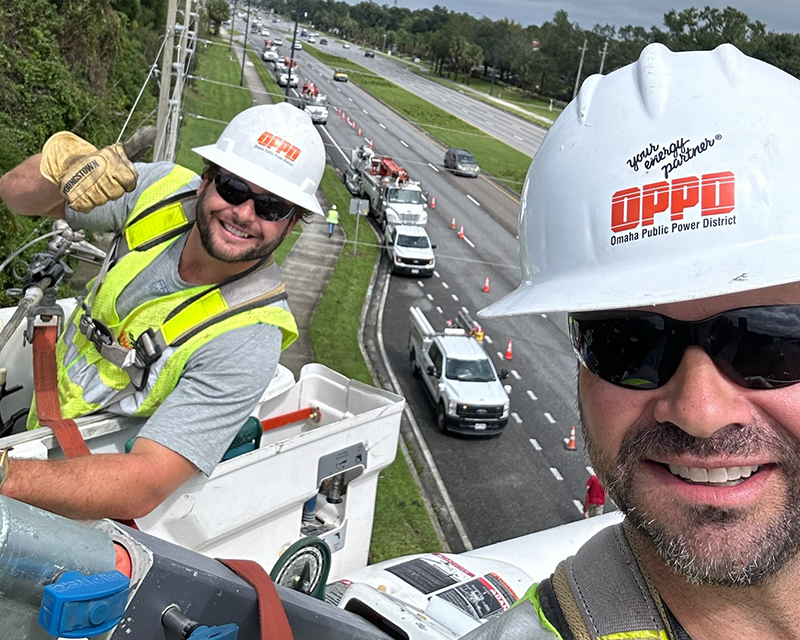
When major storms strike, the number of customer power outages can overwhelm even the biggest utilities.
The solution for OPPD and many others is mutual aid, a partnership where utilities and qualified electrical contractors send their workers to hard-hit areas to help restore power faster and more efficiently.
The arrangement offers some big (and surprising) benefits. Here’s how it works:
Local and mutual aid regional partners
OPPD belongs to groups including the Nebraska Power Association, Midwest Mutual Assistance Group and the American Public Power Association. Each organization’s members have agreed to help one another when needed if they have available resources. The groups also ensure that resources are divided fairly during widespread events.
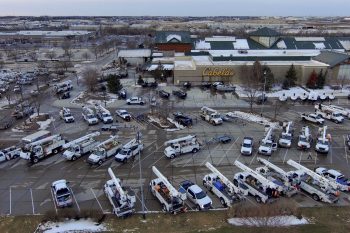
Before an anticipated major storm, member utilities huddle for a conference call to gauge who has workers available and which areas are likely to need them. Occasionally, if time allows, utilities will send teams in advance so they’re ready to work as soon as a storm passes.
OPPD tends to call fellow Nebraska utilities first, since they’re the closest, and also relies on longtime relationships with local contractors, Kansas City power utility officials, and others. This approach works best for localized storms when nearby utilities aren’t affected.
Cost efficient
The moment workers start driving toward a storm site, the utility they’re visiting pays all of their costs, from salaries and vehicle mileage to equipment usage (charged at a daily rental rate). The utility sending them pays nothing to ensure that their customers aren’t footing the bill for another region’s storm.
When OPPD gets called, the utility sends 16-member teams composed of a field supervisor, four three-person line crews, two fleet transportation technicians, and a safety specialist. The composition of those teams has changed slightly over the years, but OPPD has learned through experience that the current mix helps maximize their effectiveness.
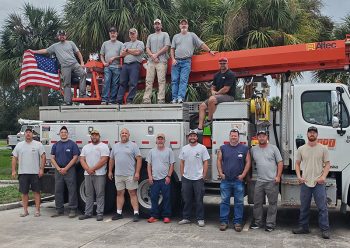
Line crews handle most of the physical restoration work. Field supervisors guide and oversee the crews and facilitate communication between their team and the host utility.
Transportation mechanics fix all kinds of mechanical issues, be it a flat tire or a malfunctioning truck boom or a broken chainsaw. Safety specialists promote safe work practices and act as utility players, handling any task that might distract the line workers.
Preparing early
Mutual aid work begins long before anyone starts a truck or turns a wrench.
“There are a ton of support functions and a lot of behind the scenes work that goes into it,” said Eli Schiessler, interim director of Operations Support and one of several Storm Team leaders who coordinates mutual aid.
Before OPPD crews leave, dispatch clerks create work orders to make sure all their labor is properly documented (this helps later with record-keeping and reimbursement). They also help secure hotel rooms, safety supplies, extra shirts and gloves and anything else needed.
OPPD’s accounting team ensures that the host utility is properly billed for the services rendered and that OPPD’s workers temporarily come off OPPD’s payroll.
Supply chain managers ensure that gear and supplies are ready. And transportation fleet technicians thoroughly prepare every assigned vehicle for a long road trip.
Mutual benefits
Mutual aid partnerships work because the utilities that OPPD helps will often return the favor when OPPD needs assistance. Their teamwork reduces restoration times during widescale outages, often by several days.
Mutual aid trips also expose OPPD workers to the tricks and practices of other utilities, which OPPD will sometimes adopt.
Utilities also sometimes call on “aggregators” – brokers that can deliver a lot of workers very quickly using their industry contacts. Aggregators can help tremendously in some situations, but tend to be more expensive than working directly with other utilities.
OPPD also benefits from having local contractors, LE Myers and Watts, that routinely work on OPPD infrastructure. Because they’re local and familiar with OPPD’s systems, they’re very reliable and don’t need lodging, which frees up more hotel rooms for out-of-town crews.
Serving others
When OPPD gets a request for assistance, Schiessler said the utility always has more volunteers than it can realistically send.
And when external crews arrive in eastern Nebraska, OPPD works hard to ensure they have a good experience, with plenty of support.
If mutual aid workers have problems with OPPD, their home utilities are unlikely to send them in the future. So OPPD provides visiting workers with meals, hotel rooms and laundry service (some OPPD employees even volunteer their personal washing machines).
In other states, hotel rooms shortages sometimes force workers to sleep in their trucks or makeshift tent cities.
“Treating people right really makes a difference,” Schiessler said. “It’s about building those relationships.”
Grant Schulte joined OPPD as a content generalist in 2022. He is a former reporter for The Associated Press, where he covered the Nebraska Legislature, state politics and other news for a global audience. He is a graduate of the University of Iowa and a proud Hawkeye. In his free time he enjoys running, reading, spending time with his wife, and all things aviation.
View all posts by Grant Schulte >