Energy news from Omaha Public Power District
Energy news from Omaha Public Power District
What you need to know about the Southwest Power Pool
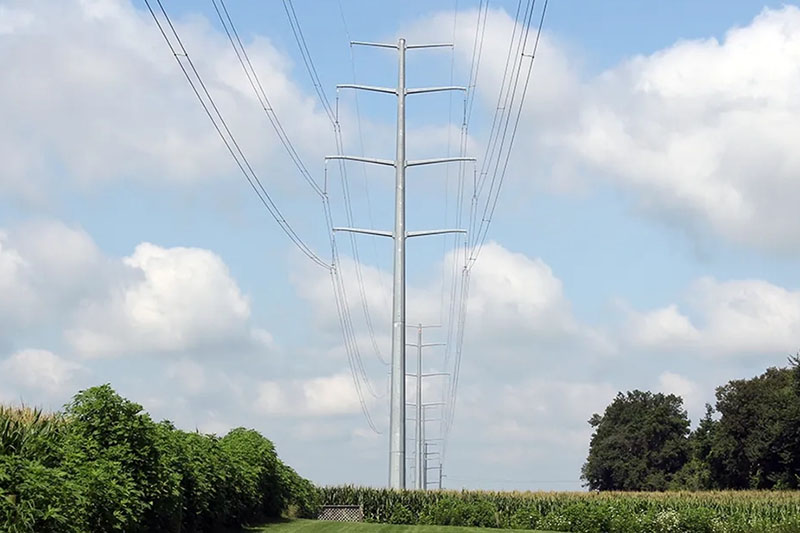
Behind all the electricity that powers much of the central and western United States is a little-known organization with a huge and critical job.
The Southwest Power Pool (SPP) ensures the safe, reliable and efficient flow of electricity through all or part of 17 states, including Nebraska.
Like an air traffic controller, SPP coordinates nearly 150 members – public and private utilities, electric cooperatives, and many others – to direct electricity where it’s needed at competitive prices.
Those who participate in the SPP’s vast, diversified market (including OPPD) also gain access to a pool of electricity far greater than any individual member could produce on its own. Collectively, SPP serves about 20 million people throughout the central and western U.S.
“When you boil it down, it’s safety in numbers,” said Collin Sniff, OPPD’s manager of Energy Regulatory Policy. “When there’s a pool of utilities working together, we have access to greater generation assets in times of need.”
A market-based solution
Those members, including OPPD, benefit in many ways.
An integrated marketplace allows members to buy and sell electricity when they need it, or when it makes financial sense to do so.
Say the wind is blowing in North Dakota. With lots of wind turbines spinning, member utilities in that region may produce more electricity than they need. Through the SPP, they’re able to sell that excess into a marketplace.
Buyers benefit, too. If a generation unit in Oklahoma goes offline unexpectedly or an unseasonably hot day raises demand, utilities in that state can purchase the electricity they need to serve their customers. In some situations, it might simply be cheaper for a utility to buy electricity on the market than to generate its own.
The integrated marketplace also helps manage costs by dispatching the lowest-cost energy sources first.
Wind generation is usually among the first to be tapped because the marginal cost of its fuel (wind) is zero. But the wind doesn’t always blow. Coal generation runs consistently and reliably but is also more expensive and needs more time to ramp up. Natural gas and fuel oil are dependable, but subject to price swings based on their availability, public demand and the weather.
SPP provides a $24-to-$1 return on investment for its members, for a total that now exceeds $4.7 billion in savings and benefits. These savings come in a variety of forms for individual members, including lower production costs, helping dispatch electricity more efficiently, reserve sharing among members and avoiding the need for costly, redundant infrastructure.
Low-cost power and dependable energy infrastructure is also a significant advantage for states that want to attract new industries and jobs.
A growing footprint
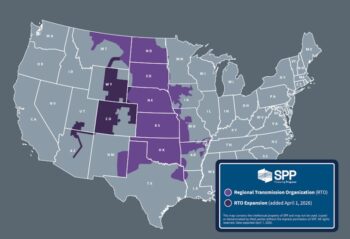
The SPP is a regional transmission organization (RTO) that spans a huge swath of the central and western United States, from North Dakota and Montana down to Texas. Nebraska’s largest electric utilities – OPPD, Nebraska Public Power District and Lincoln Electric System – joined SPP in 2009.
RTOs are independent, nonprofit entities mandated by the federal government to coordinate, control and monitor the multistate electric power grid.
SPP was created in 1941 by eleven utilities in and around Arkansas, including the Nebraska Power Company, a predecessor to OPPD. As factories ramped up production to support the United States during World War II, demand for electricity increased and the utilities decided to pool their resources to meet the growing need.
The modern RTO model emerged in the 1990s and 2000s as transmission networks grew, became more complex and expanded across state lines. Without a central authority to help manage the larger regional grid, utility-by-utility coordination often proved impractical. So the Federal Energy Regulatory Commission created modern RTOs as independent, nonprofit organizations whose mission is to ensure fairness, wholesale price competition, reliability and long-term planning.
On April 1, dozens of new entities either joined or expanded their membership in the SPP, including the City of Sidney (which joined as a market participant) and the Municipal Energy Agency of Nebraska (a nonprofit that expanded its SPP membership).
The SPP’s new footprint covers all or part of 17 states: Arizona, Arkansas, Colorado, Iowa, Kansas, Louisiana, Minnesota, Missouri, Montana, Nebraska, New Mexico, North Dakota, Oklahoma, South Dakota, Texas, Utah and Wyoming.
Planning for the future
With growing demand for electricity and the need to prepare for extreme weather, SPP has also taken steps to ensure a robust and resilient power supply.
In 2024, SPP increased the planning reserve margins that its member utilities must maintain in their daily operations. Planning reserve margins represent the amount of power utilities have available beyond their peak projected demand to guard against unplanned situations or stresses on the grid.
For the first time, the new reserve margin requirements vary by season. OPPD and other load-serving SPP members must maintain enough generating capacity to serve their peak consumption, plus an additional 36% planning reserve margin in winter and a 16% margin in the summer.
That increase, which went into effect this year, means OPPD and many other utilities need to add even more access to generation capacity, all while serving unprecedented new demand.
Despite that pressure, Nebraska’s status as an all-public-power state continues to produce some of the nation’s lowest rates and greatest reliability.
Two key indicators tell the story:
SAIFI (System Average Interruption Frequency Index) measures how often the average customer loses power. Nebraska’s SAIFI hovers around 1.2 outages per customer, per year. This is notably better than the U.S. national average, which is between 1.4 and 1.67 interruptions per customer annually.
A second measure is SAIDI (System Average Interruption Duration Index) tracks the time a customer is without power. Nebraska’s SAIDI consistently ranks among the nation’s best, with an average annual duration of just 73.6 minutes per year (excluding storm events), according to the U.S. Energy Information Administration. The U.S. average was 126 minutes annually.

Grant Schulte joined OPPD as a content generalist in 2022. He is a former reporter for The Associated Press, where he covered the Nebraska Legislature, state politics and other news for a global audience. He is a graduate of the University of Iowa and a proud Hawkeye. In his free time he enjoys running, reading, spending time with his wife, and all things aviation.
View all posts by Grant Schulte >