Energy news from Omaha Public Power District
Energy news from Omaha Public Power District
You can help OPPD plan for eastern Nebraska’s energy future
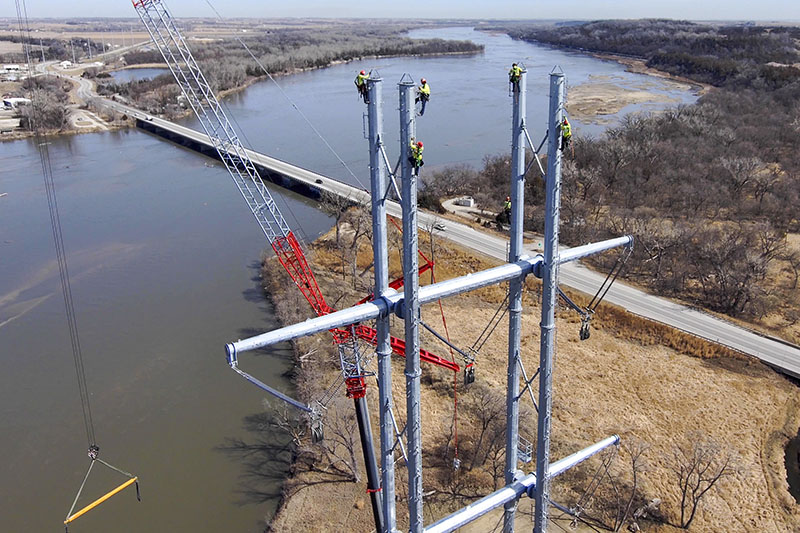
Every five years, OPPD turns to the public for input on ways to strengthen, expand and modernize the electrical grid that serves eastern Nebraska.
That feedback helps create a broad, high-level roadmap, known as an Integrated System Plan, to guide the utility’s work over the next decade. The work is more important than ever as OPPD manages new reliability demands and growth that would have seemed unthinkable just a few years ago.
“We’re striving to achieve all of our core objectives,” said Dan Lenihan, OPPD’s senior director of Integrated System Planning. “We may have to make some tradeoff decisions as we’re balancing and prioritizing, and that’s why it’s so important that we get a good pulse from our customers and stakeholders. We appreciate the responses we receive.”
A complex challenge
Balancing the needs of a massively complex electrical grid isn’t easy. Every type of generation has benefits and trade-offs, and answers are never as clear-cut as they might seem. With every decision, OPPD must weigh the priorities of reliability, affordability and environmental sensitivity.
An unprecedented surge in demand for electricity complicates matters even more. As OPPD receives more and larger requests for service, the utility must ensure a robust power supply for every customer while supporting new economic development. Supply chain challenges have made parts and equipment scarcer and raised prices.
A new approach
Traditionally, OPPD has crafted an Integrated Resources Plan that focused solely on how to generate electricity.
The U.S. Department of Energy requires OPPD to submit a plan every five years to qualify for federally generated hydropower from the Western Area Power Administration that OPPD currently receives.
But as the electrical grid grows and demand rises, OPPD engineers decided to broaden their approach. The Integrated System Plan will consider generation sources along with transmission and distribution infrastructure and “customer solutions” – a catchall term that includes everything from rooftop solar programs to customer incentives that help reduce energy consumption and improve efficiency.
“The system is changing rapidly,” Lenihan said. “With the evolving generation mix and surge in demand, you have to take into account the transmission and distribution system even more so.”
No regrets
Lenihan said the Integrated System Plan will help OPPD develop a “no regrets” approach – a plan that will work for best- and worst-case scenarios and everything in between. An unknown future requires cautious, conservative planning.
“Our goal is to plan a future system that can accommodate our lack of perfect visibility into the future,” said Shannon Coleman, director of Energy Portfolio Planning at OPPD.
Recent Integrated Resource Plans have recommended a diverse fuel mix to balance different possible outcomes.
Of course, OPPD must always abide by federal and state laws and regulations, as well as tougher new regional safeguards to maintain adequate energy reserves during extreme weather.
The Southwest Power Pool will soon require its member utilities, including OPPD, to maintain enough generating capacity to serve their peak energy consumption plus an additional 36% reserve margin in winter and a 16% margin in summer.
“Within those confines, we’re looking at multiple options – renewable resources, conventional resources, nuclear and demand-side customer options like rooftop solar,” Lenihan said.
‘What if’ scenarios
As part of the process, OPPD will model a number of “what if” scenarios to see which ones produce an acceptable result.
The possibilities seem endless: What would happen to costs and reliability if OPPD moved exclusively toward renewable energy sources? Or if it focused more on carbon-based sources?
What if the expected boom in demand for electricity flattens unexpectedly? How much would it cost to add nuclear energy with current available technology? How practical is it to repair, retire or convert existing units? And how does the availability and cost of new generation affect customer affordability?
Therein lies the need for public input. Lenihan and Coleman said customers and stakeholders can help shape the types of scenarios modeled, especially if the comments OPPD receives reveal areas of heightened interest.
“We want to make sure we’re very intentional about the way we model the system,” Coleman said. “This Integrated System Plan will enable better planning for the system as a whole.”
The review will also examine North Omaha Station, OPPD’s oldest generation facility. In December, OPPD’s publicly elected Board of Directors instructed the utility to take a much more detailed look at transitioning the plant from coal generation to natural gas.
Big changes
In the last five years, OPPD has added major new generation through Platteview Solar (the largest currently operating solar farm in Nebraska) and the Turtle Creek Station and Standing Bear Lake Station natural gas facilities. In the next few years, the utility will continue generation expansion in renewable energy, battery storage and natural gas generation that will result in an almost doubling of its generation capacity.
OPPD is also working on major transmission and distribution projects to support surging customer demand and integrate the newly expanding generation fleet into the grid.
Part of that work includes an anticipated 400 miles of new transmission towers and lines – a 400% increase over what was built within the last decade. Additionally, OPPD is modernizing its distribution system with a new advanced metering infrastructure (AMI) ecosystem of 420,000+ new advanced customer meters along with new software platforms and communication networks that will enhance OPPD’s daily operations and modernize its grid to better support a growing adoption of evolving customer technologies.
Get involved
To join OPPD in planning for eastern Nebraska’s energy future, sign up to join a workshop or watch one online on OPPD Community Connect’s Integrated System Planning page.

Grant Schulte joined OPPD as a content generalist in 2022. He is a former reporter for The Associated Press, where he covered the Nebraska Legislature, state politics and other news for a global audience. He is a graduate of the University of Iowa and a proud Hawkeye. In his free time he enjoys running, reading, spending time with his wife, and all things aviation.
View all posts by Grant Schulte >