Energy news from Omaha Public Power District
Energy news from Omaha Public Power District
Farmers see benefits for York County, families in proposed solar project
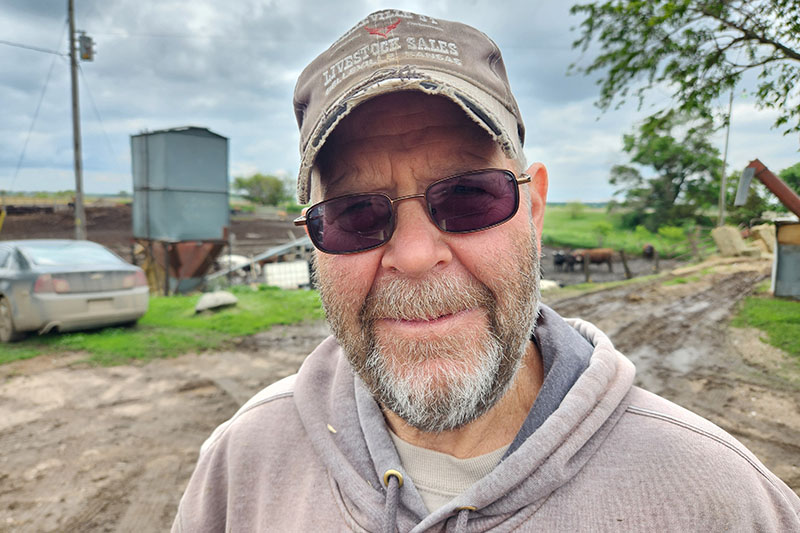
Ask Clint Schwartz why he partnered with OPPD on a proposed solar energy project and the McCool Junction farmer talks about his children.
Schwartz grows corn and beans on irrigated land in York County, an area his family has farmed ever since his grandfather bought a small plot in 1943. Now, the family’s property could become a productive, income-generating solar array – and Schwartz can hardly wait to get started.
“It ensures that this farm will stay in our family for the next generation,” he said. “There are so many unknowns with farming right now. It’s difficult in a lot of respects. And with this project, we’ll still be involved with our land.”
OPPD is pursuing the K Junction Solar project to strengthen and diversify an energy portfolio that serves 893,000 Nebraskans while providing economic benefits to all of York County. The utility’s current mix already includes natural gas, oil, coal, hydroelectric power via contracts, and wind and smaller solar arrays through power-purchase agreements.
York County commissioners will consider the project soon.
Big benefits
If approved, K Junction Solar would generate about 310 megawatts of low-cost solar power and deliver an estimated $53.7 million economic boost to area businesses.
Tax revenue from the project would support local schools at a time when many rural Nebraska districts are consolidating. Eight different York County taxing authorities would collect revenue, with more than $200,000 going annually to the county’s general fund and $775,000 going to the McCool Junction school district.
“We love our school,” Schwartz said. “All four of my kids went to McCool Junction. Maybe I’ll have grandkids that will go there. If this project goes through, it’ll ensure that McCool will be here for at least the next 30 years.”
At the same time, Schwartz and his family will continue to own and make use of their land. Sheep can easily graze around the solar panels. The family can harvest hay to boost their income and diversify their operations. Schwartz can grow alfalfa or plants that support local pollinators, which in turn will help his other crops.
Most importantly, the project gives the family stability in a notoriously tough industry.
“People have every right to rent their land to earn a living, just like I’ve got the right to sign mine up for solar,” he said.
By converting his cropland, Schwartz said he will also ease pressure on local groundwater supplies and reduce the nitrates that need to be added to the soil to improve yields.
“We didn’t take this decision lightly,” he said. “I want this land to be in our family for the next 100 years, until my kids are gone. When he was alive, my dad supported this project. And if he was here today, he’d be standing right next to me today still supporting it.”
‘It removes a lot of the worries’
York County farmer Paul Wiess joined forces with OPPD to develop stretches of land his family has owned for at least 60 years. His children don’t plan to farm any of his 120-acre plots, so converting the land for solar energy production made sense. The property belongs to him, after all, and he sees no reason why he can’t use it in a lawful transaction that will benefit his family and community.
“I thought it was just a good way for us to generate some extra money and for my kids to have an income too,” he said. “I’m 73, and I’m not going to live forever. This way, my kids won’t have to worry about renting out the land. It removes a lot of the worries for everybody.”
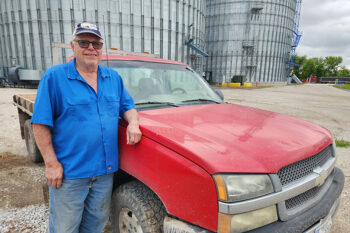
Wiess said he also appreciates the care that OPPD and its contractors have promised to take of the land.
The project includes reasonable regulations. Visual screening requirements will protect neighbors’ views, with trees and bushes planted to both help the site blend into the landscape and improve biodiversity.
Road-use agreements would guarantee protection of public infrastructure and hold developers responsible for any potential property damage.
Utility-scale solar arrays are also very quiet, with noise levels comparable to a normal conversation heard 100 feet away from the facility’s power inverter. They do not produce any noticeable extra heat and pose no threat to nearby livestock.
“Unless things really change, this is the best way for me to have a decent income and for my kids to not have to worry,” Wiess said.
Decades of change
Wiess, who works at a local co-op, said local farmers already take their crops to different facilities around York County, so no single co-op will suffer a major loss.
The prospect of a changing landscape doesn’t bother him, either. Over the years, neighbors have erected hog houses and feedlots in the area. A Walmart built in nearby York in 1996 transformed quiet farmland into a busy stop for motorists along Interstate 80.
“The last 40 years have already seen a lot of change,” he said. “People put up houses. They put up grain facilities. Nothing stays the same. Putting these solar panels up isn’t going to ruin anything.”
Wiess also understands that the electricity generated benefits everyone, and not just Omaha residents, by strengthening the overall grid.
Another local farmer, Hank McGowan, sees an opportunity to improve his operations in partnership with OPPD.
While he collects rental income for the use of his property, McGowan plans to deploy sheep and cows on the land to eat weeds and grasses. The arrangement will work nicely because cows and sheep have different grazing habits and won’t disturb the solar panels.
“It eliminates risk from our operation, and that’s what we’re trying to do,” McGowan said. “We hedge our bets with grain. We hedge our bets with cattle futures. We buy crop insurance. That’s how the business works.”
Grant Schulte joined OPPD as a content generalist in 2022. He is a former reporter for The Associated Press, where he covered the Nebraska Legislature, state politics and other news for a global audience. He is a graduate of the University of Iowa and a proud Hawkeye. In his free time he enjoys running, reading, spending time with his wife, and all things aviation.
View all posts by Grant Schulte >