Energy news from Omaha Public Power District
Energy news from Omaha Public Power District
On-site decommissioning officially ends at Fort Calhoun Station
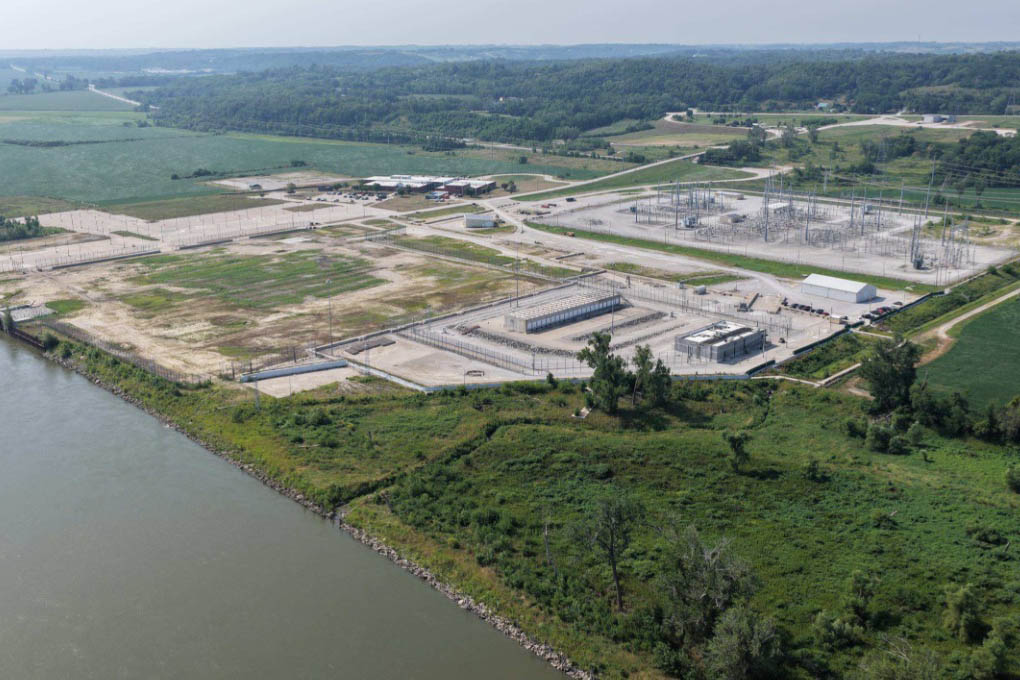
Ten years after OPPD started to decommission its Fort Calhoun Station (FCS) power plant in accordance with federal guidelines, all of the physical demolition work is now officially done.
OPPD achieved substantial completion at the plant on Oct. 7, leaving just paperwork and federal reviews. The milestone marks a bittersweet moment for OPPD, with hundreds of employees who worked at the plant and helped safely decommission the site.
“I think that, by and large, everyone is awfully proud of the legacy of Fort Calhoun,” said Tim Uehling, senior director of FCS Decommissioning, who spent his career at the plant in a variety of roles. “And they’re just as proud to help put that legacy to bed safely, with the same level of care that we maintained when we were operating.”
All that remains at the site is a substation, a training center now being used as office space, a robust concrete storage building, a metal storage shed for equipment and a six-bay garage. The property also holds a highly secure storage facility for used fuel assemblies (fuel rods) from FCS.
FCS came online in 1973. It ceased operations in 2016 due to economic necessity and significant shifts in the energy industry. The station’s single pressurized water reactor generated 484 megawatts of electricity, the smallest rated capacity among all operating commercial power plants in North America. The economies of scale of running a nuclear plant that small became difficult.
Final steps
Workers collected the final radiological samples this week to be tested both on-site and in an off-site, independent laboratory, a necessary step to demonstrate to the federal government that the site is clean and safe. Employees have been sampling nearby water, soil and other materials for years to ensure public health and safety.
OPPD is submitting the final decommissioning paperwork to the U.S. Nuclear Regulatory Commission (NRC) in six phases. The NRC will review everything and, if all goes to plan, issue a “release for unconditional use” permit that allows OPPD to use the land in whatever way it believes will best serve customers and the community.
The NRC has approved the first two rounds of OPPD paperwork and is now reviewing the third, a process that generally takes about six months and includes follow-up questions. OPPD has submitted the fourth phase and expects to have the last two sent to the NRC by January.
More to come
What happens to the FCS site after final federal approval has yet to be decided. It’s possible that the land could be farmed or used for other purposes that benefit OPPD, the utility’s customers and the general community.
“I think each person who worked here had their own journey,” Uehling said. “A lot of folks spent decades out here, working every day to keep the plant operating safely and in good working condition. To transition to the decommissioning process – certainly they wanted to do that with a focus on quality and safety. But when your part of the plant came down, it was a little emotional at times. Ten years later, those memories are still there.”
Uehling credited all the on-site employees who worked for years to help OPPD achieve substantial completion at the site. Also critical to their success was support from OPPD managers, executives and board members, he said.
“It really speaks volume to the OPPD culture of how this was done with care, all the way around,” Uehling said.

Julie Wasson is the brand journalism strategist at Omaha Public Power District and the editor of The Wire. She has more than 25 years of print journalism and social media experience, including two stints at the Omaha World-Herald.
View all posts by Julie Wasson >